
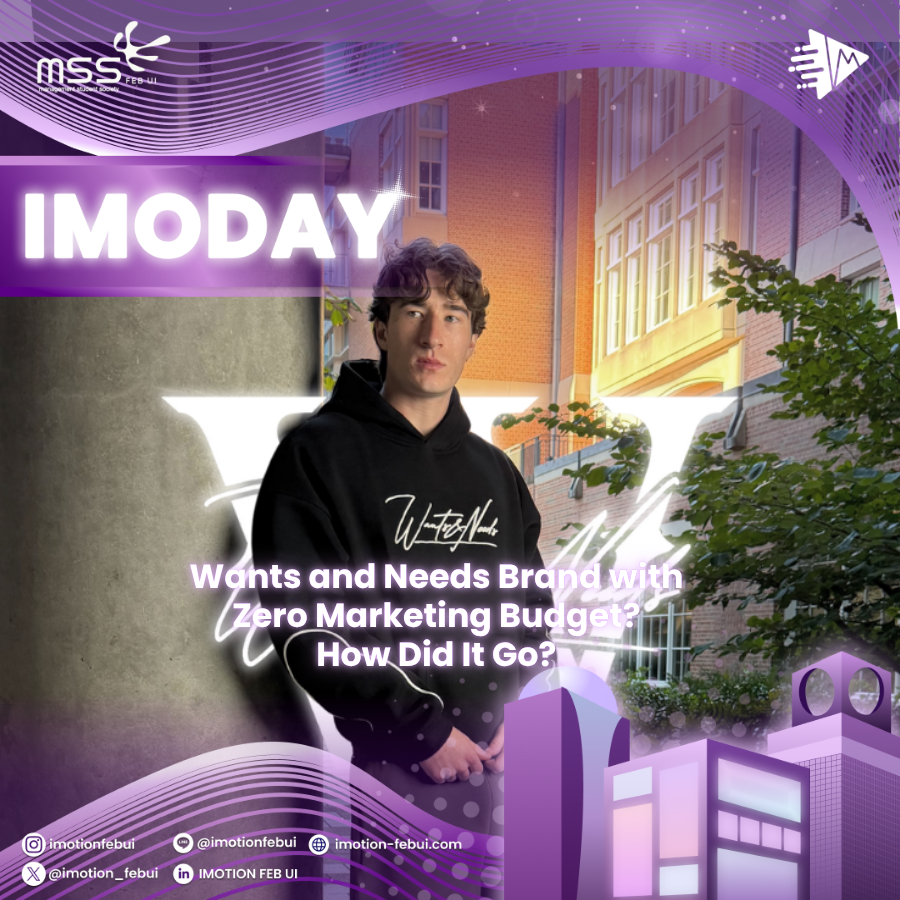
Most clothing brands begin with the same playbook: paid ads, influencer deals and carefully shot lookbooks. Wants and Needs took a different route. By late 2025 its Instagram account had passed 598K followers, reportedly with no influencer partnerships and a startup budget of around $25K. The obvious question is how a brand grows that fast without telling anyone to buy anything.
Wants and Needs is an online clothing brand that sells simple basics. Its current drop lists navy hoodies, baggy sweatpants and black jeans, and several of them already show as sold out. Products are released in numbered, limited drops, and each drop is announced with a fixed date and time. The brand’s own pitch is minimal. The site carries a short slogan, “Take Action”, and little else.
The marketing does the heavy lifting. Its videos are voiceless comedy skits, recreations of viral moments, or stitches that cut from a viral clip into the brand’s own version. The clothing usually appears only in the last two to three seconds. The format stays the same from video to video, which keeps production cheap. Audio is either the original sound of the clip or an upbeat track, and the outfit change lands on the beat. Attention is then directed toward a simple conversion path. Captions repeatedly invite viewers to join the email list for 10% off. The brand also runs other hook styles, such as street interviews and audience votes like “Should we drop it?”
The mechanism underneath all of this is what I would call an expectation hook. The opening seconds set up an expectation: the viewer believes they are watching ordinary entertainment, often built on a visual that has already proven itself elsewhere. The product then arrives as an unexpected head-fake that changes how the video reads, and the more absurd the reveal, the better the video tends to perform. The gap between what the viewer expected and what appears is what produces the laugh, the share and the follow. This is my framing of the pattern, but it matches what the evidence shows.
This structure answers several problems at once. It stops the scroll, because the hook offers entertainment rather than a message. It avoids ad resistance, because nobody expects a sales pitch inside a skit. It keeps costs low, because the formats are repeatable and need no voiceover or agency. And it gives attention somewhere to go, through the email list and the next drop. It does not guarantee results. Even on their own TikTok, one video reached 14.8K likes while a plain launch post received 435, so the method works as a repeatable system for testing hooks rather than a promise that every video will perform.
A note on the title: “zero budget” is a claim from the post you shared, and I could not verify it. The source I found says no influencer partnerships and a small startup budget, which is not the same as zero ad spend. If this goes public, you may want to soften it to “almost no marketing budget”
Refrences
– https://blog.sandcastles.ai/p/creatorbreakdowns-wantsandneeds
– https://www.instagram.com/p/DeuN0mQES0t/?img_index=2
Written by Reval Fiirizki Ilham, Management 2026, Marketing The 20th IMOTION